Your Health History Is Only as Strong as Its Weakest Link: Why Local Hospital Records Are Critical to Your Care
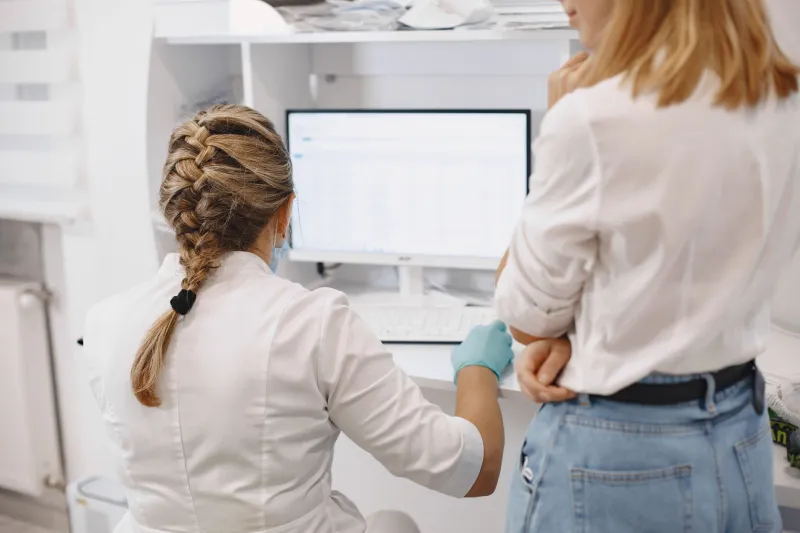
There is a widely held assumption among patients that once information enters the healthcare system, it flows freely wherever it needs to go. A test result from a specialist, a prescription logged at an urgent care clinic, a procedure performed during an out-of-state visit—many people believe these details automatically populate whatever chart a physician opens. In reality, that is rarely how it works.
Medical records in the United States remain fragmented across thousands of independent systems, each operating under different software platforms, privacy protocols, and data-sharing agreements. For the patient sitting in an exam room, this fragmentation is largely invisible—until it isn't. Until a physician prescribes a medication that conflicts with one already on file elsewhere. Until a diagnostic delay stretches weeks longer than it should because a prior imaging report never made it to the right desk.
At City Hospital Damoh, we have built our record-keeping infrastructure around a simple but consequential belief: your complete health history belongs to you, and continuity of care begins with making that history accessible, accurate, and organized.
The Hidden Danger of Disconnected Records
Consider a scenario that plays out in hospitals and clinics across the country more often than most patients realize. A patient visits an emergency room while traveling out of town. The attending physician, working without access to the patient's established medical record, orders a medication that is contraindicated with a long-term prescription the patient takes daily. The patient, under stress and perhaps not thinking clearly, forgets to mention it. The result can range from a minor adverse reaction to a serious medical event.
This is not a hypothetical edge case. According to research published in peer-reviewed medical literature, medication errors are among the most common—and most preventable—forms of medical harm. A significant proportion of those errors stem directly from incomplete information at the point of care.
Diagnostic delays present a parallel problem. When a physician cannot access prior lab work, imaging studies, or specialist notes, the natural response is to start over. That means repeated tests, additional cost, and lost time—time that, in conditions like cancer or cardiovascular disease, can carry genuine clinical consequences.
What Integrated Record-Keeping Actually Means
City Hospital Damoh's approach to medical records is not simply about storing data. It is about creating a living, longitudinal picture of each patient's health that remains coherent across encounters, departments, and time.
Our integrated electronic health record system connects information from inpatient admissions, outpatient visits, laboratory results, radiology studies, and pharmacy records into a single unified view. When a physician at our facility sees a patient—whether for a routine follow-up or an urgent concern—they are working from the same comprehensive record, not a patchwork of disconnected notes.
This continuity has measurable effects. Physicians spend less time reconstructing history and more time making informed decisions. Nurses and pharmacists can cross-reference medications with documented allergies and existing prescriptions before anything is administered. And patients, who often see multiple providers across different settings, benefit from a care team that is genuinely working from the same page.
Why Your Local Hospital Record Matters More Than You May Realize
For residents of the Damoh area, your City Hospital Damoh record is likely the most comprehensive single document of your health history available anywhere. It captures not only what treatments you have received, but the clinical reasoning behind them—physician notes, differential diagnoses, responses to treatment, and follow-up plans that external providers simply do not have access to unless you provide them.
This becomes especially important in three common situations.
When you travel. If a medical emergency occurs while you are away from home, the receiving facility will have limited information about your history. A printed or digitally accessible summary of your current medications, known allergies, chronic conditions, and recent procedures can be the difference between care that is appropriately tailored and care that inadvertently causes harm.
When you switch providers. Changing primary care physicians, moving to a new city, or transitioning from a pediatric to an adult care setting all create natural breaks in the medical record chain. Without proactive steps to transfer your records, your new provider starts from scratch—and so does your care.
When you see a specialist. Specialist consultations are most productive when the consulting physician has full context. Sending a complete record—rather than a brief referral note—allows specialists to build on existing knowledge rather than duplicate prior workups.
Practical Steps to Take Control of Your Records
Understanding the importance of your medical records is the first step. Taking action is the second. Here is how patients can work with City Hospital Damoh and other providers to maintain meaningful control over their health information.
Request a complete records summary at least once a year. You are legally entitled to your medical records under the Health Insurance Portability and Accountability Act (HIPAA). Contact our Medical Records department to request a comprehensive summary that includes your current medication list, documented diagnoses, recent lab values, and any active care plans. This annual review also gives you the opportunity to identify and correct errors.
Create a portable health summary before any major event. Before elective surgery, a long trip, or the start of a new treatment program, compile a one-to-two-page summary of your most essential health information. Include medications with dosages, allergies, chronic conditions, your primary care physician's contact information, and the name of a person authorized to make decisions on your behalf if needed.
Ask about patient portal access. City Hospital Damoh offers secure digital access to portions of your health record through our patient portal. Enrolling in this service allows you to review test results, track visit summaries, and share information with other providers electronically—reducing the risk of transcription errors and lost paperwork.
Inform every provider of every medication. This sounds obvious, but it remains one of the most frequently overlooked safety steps in healthcare. Over-the-counter medications, herbal supplements, and vitamins all carry interaction potential. A complete and honest medication list, shared at every clinical encounter, is one of the simplest and most effective safeguards available to any patient.
Designate a healthcare advocate. If your health situation is complex, consider identifying a trusted family member or friend who is familiar with your medical history and can communicate on your behalf if you are unable to do so. Ensure that person knows where your records are stored and how to access them.
A Commitment That Extends Beyond the Appointment
At City Hospital Damoh, our responsibility to patients does not end when a visit concludes. We view the medical record as an extension of the care relationship—a tool that should serve patients across every setting, every provider, and every phase of their health journey.
The healthcare system as a whole has more work to do in achieving true interoperability. But within our community, we are committed to ensuring that every patient who walks through our doors leaves with both the care they need and the information they deserve. When patients are equipped with organized, accurate, and accessible health records, they become active participants in their own safety—and that partnership is among the most powerful forces in medicine.
If you have questions about accessing your records or enrolling in our patient portal, our Medical Records team is available to assist. Because your health history is not just a document. It is a foundation—and it is worth protecting.