More Than a Place to Rest: What Your Hospital Bed Reveals About Your Recovery
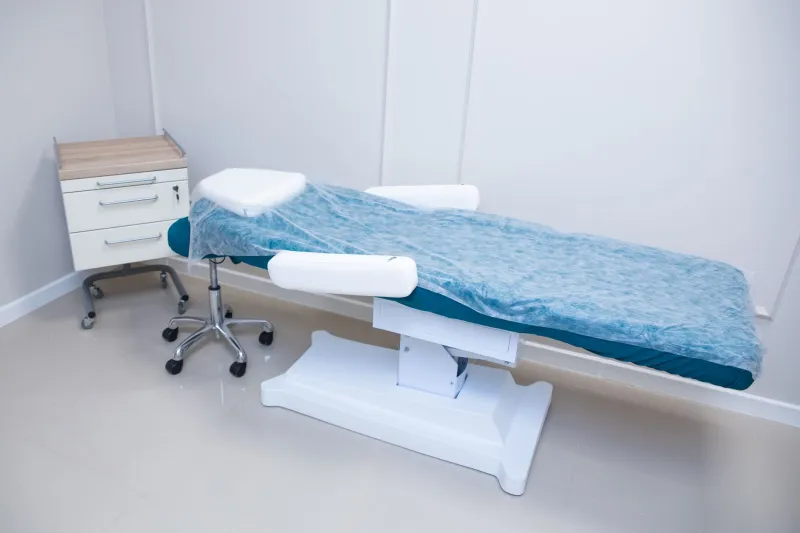
There is a particular moment many patients describe — usually around the second or third night of a hospital stay — when the bed beneath them stops feeling neutral. The mattress seems firmer than it did before. A position that was comfortable at noon becomes a source of dull aching by midnight. The rail on the left side feels closer than it should. Suddenly, a piece of furniture that most people never give a second thought becomes central to every waking hour.
At City Hospital Damoh, we believe that understanding your immediate environment is part of understanding your own care. The hospital bed is not simply a platform for rest. It is a clinical tool — one with measurable effects on circulation, respiratory function, wound healing, and psychological well-being. When patients know what to expect from that tool, and how to use it in their favor, outcomes genuinely improve.
The Engineering Behind the Hospital Bed
A modern hospital bed is a sophisticated piece of medical equipment. Unlike a standard mattress-and-frame setup at home, clinical beds are designed with multiple simultaneous objectives: they must support safe repositioning of patients who may have limited mobility, accommodate monitoring equipment, reduce the risk of pressure injuries, and allow nursing staff to perform assessments and procedures without causing additional patient discomfort.
Most acute-care beds offer several key adjustments. The head of the bed can be elevated in increments, which is not merely a comfort feature — elevating the head between 30 and 45 degrees is a clinically recommended position for patients at risk of aspiration pneumonia, a condition in which fluids or food particles enter the airway. For patients recovering from abdominal surgery, a slight elevation of the knees reduces tension across the incision site. For those with heart failure or respiratory conditions, an elevated torso eases the work of breathing.
Bed height adjustment is equally important, though patients rarely think about it. A bed positioned at the correct height for a patient's stature reduces the risk of falls during transitions — moving from lying to sitting, or from sitting to standing. Falls remain one of the most significant preventable safety events in hospital settings across the United States, and bed height is one of the simplest variables in that equation.
Mattress Technology and Pressure Injury Prevention
Pressure injuries — sometimes called bedsores or pressure ulcers — are among the most serious complications a hospitalized patient can develop, particularly during extended stays. They form when sustained pressure on a single area of skin restricts blood flow to underlying tissue. Bony prominences such as the heels, sacrum, and shoulder blades are especially vulnerable.
The mattresses used in clinical settings are designed with this risk in mind. Many hospitals, including City Hospital Damoh, utilize pressure-redistribution surfaces — mattresses engineered to spread a patient's weight across a broader surface area, reducing peak pressure at any one point. More advanced options include alternating-pressure mattresses, which use air-filled chambers that inflate and deflate in programmed cycles, continuously shifting the points of contact between the patient and the surface beneath them.
For patients who will be immobile for an extended period, nursing staff typically follow a repositioning schedule — turning or adjusting the patient at regular intervals to prevent prolonged pressure on vulnerable areas. Patients and family members can actively support this process by communicating any discomfort promptly rather than waiting for scheduled check-ins.
What Patients Often Do Not Know to Ask
One of the most consistent observations from City Hospital Damoh's patient experience team is that many patients tolerate discomfort silently, assuming that a degree of physical misery is simply part of being hospitalized. This assumption, while understandable, is not accurate — and acting on it can delay recovery.
There are several adjustments and accommodations worth requesting if you find your current setup uncomfortable:
Pillow positioning. The standard hospital pillow is functional but limited. Asking for an additional pillow to support the knees, elevate the heels off the mattress surface, or prop the arm of an IV site can make a meaningful difference in sustained comfort. Heel elevation, in particular, is a recognized strategy for reducing pressure injury risk in the lower extremities.
Bed position for meals. Eating while lying flat or at a minimal incline increases the risk of aspiration. If a meal tray arrives and your bed has not been adjusted to a more upright angle, ask your nurse to raise the head of the bed before you begin eating. This is a simple step with genuine clinical relevance.
Side rail use and fall prevention. Side rails serve a protective function, but patients sometimes feel confined by them. If rail positioning is causing discomfort or anxiety, discuss this with your care team. There are often configurations that balance safety with a greater sense of openness.
Noise and light management. While not strictly a feature of the bed itself, the environment around the bed — lighting levels, proximity to a window, distance from high-traffic hallways — affects sleep quality, which in turn affects recovery. Patients should feel empowered to raise these concerns with nursing staff or patient advocates.
The Connection Between Positioning and Healing
The physiology of recovery is not passive. Circulation must remain adequate to deliver oxygen and nutrients to healing tissue. Respiratory function must support the immune response. Lymphatic drainage, which plays a role in reducing post-surgical swelling, is influenced by body position. Even something as seemingly minor as where your legs are positioned relative to your torso affects venous return — the rate at which blood flows back toward the heart.
For patients recovering from orthopedic procedures, proper limb elevation can reduce swelling and pain more effectively than additional medication. For post-cardiac patients, the relationship between body position and cardiac workload is well-documented. Nurses at City Hospital Damoh are trained to recommend positions based on each patient's specific diagnosis and recovery trajectory, but those recommendations are most effective when patients understand the reasoning behind them and can communicate when something is not working.
Advocating for Your Comfort Is Advocating for Your Health
There is a cultural tendency in healthcare settings to defer entirely to clinical staff — to accept conditions as given and to minimize personal discomfort in order to avoid appearing difficult. At City Hospital Damoh, we actively encourage the opposite. Patients who communicate their needs clearly, ask questions, and participate in decisions about their immediate environment consistently report better experiences and, in many cases, demonstrate measurably improved recovery indicators.
Your hospital bed is not incidental to your care. It is part of it. Understanding how it works, knowing what adjustments are available to you, and feeling confident enough to ask for changes when something is not right — these are not small things. They are expressions of the same principle that guides everything we do: that compassionate care begins with treating every patient as an active participant in their own healing, not a passive recipient of it.
If you have questions about comfort accommodations, fall prevention resources, or patient advocacy services during your stay at City Hospital Damoh, our nursing staff and patient experience team are available to assist you at any time.